
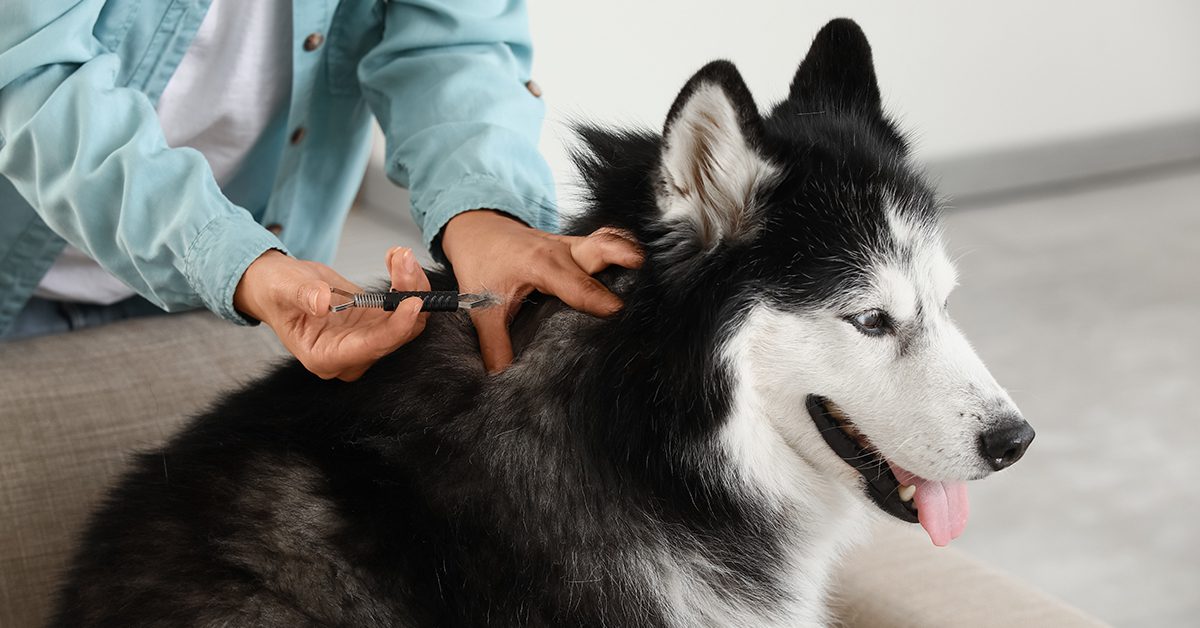
To remove a tick from a dog, grasp it as close to the skin as possible with fine-tipped tweezers and pull straight out with slow, steady pressure. Avoid twisting, squeezing, or crushing the tick, and call your veterinarian if you have any trouble or notice changes at the bite site. Finding a tick on your pup can feel alarming, but staying calm and acting quickly makes a real difference, since the longer a tick stays attached, the greater the chance it passes along disease. In New Braunfels and across the Texas Hill Country, mild winters mean ticks stay active for much of the year. The team at Comal Pet Hospital & Resort put together this guide to help you understand how to remove a tick from dog skin safely, spot ticks early, recognize the risks, and protect your best friend year-round.
How Do I Know If My Dog Has a Tick?
Ticks are small and good at hiding, so a hands-on check is the most reliable way to find them.
What a Tick Looks and Feels Like
Before feeding, many ticks are no bigger than a sesame seed. Once attached and full of blood, they swell into a gray, brown, or bluish bump that can grow to the size of a pea or larger. When you run your hands through your dog’s coat, a tick often feels like a small, firm bump stuck to the skin. Look closely to tell it apart from a skin tag or wart; a tick will have tiny legs near the point where it meets the skin.
Where to Check on Your Dog
Ticks prefer warm, protected spots with thin fur. After walks, hikes, or time in tall grass, check these areas carefully:
- Inside and around the ears
- Around the eyelids and muzzle
- Under the collar and along the neck
- Between the toes and paw pads
- In the armpits and groin
- Under the tail and around the hind end
You might also notice your dog scratching, licking, or chewing at one spot more than usual, which can signal a hidden tick.
How to Remove a Tick From a Dog
Many pet owners search for how to remove a tick from dog fur because they want to act fast without causing harm, and a careful approach matters.
Steps for Safe Tick Removal
Gather fine-tipped tweezers or a tick removal tool, gloves, and a small container or sealed bag. Then follow these general steps, which reflect guidance from the Centers for Disease Control and Prevention:
- Put on gloves and part your dog’s fur so you can clearly see where the tick attaches.
- Grasp the tick as close to the skin’s surface as possible, gripping its head rather than its swollen body.
- Pull straight upward with slow, steady, even pressure until the tick releases.
- Place the tick in a sealed bag or container in case your veterinarian wants to identify it.
- Wash your hands thoroughly and clean the area around the bite.
What Not to Do
Skip the old home remedies. Burning a tick with a match, smothering it with petroleum jelly, or painting it with nail polish can irritate the tick and may cause it to release more saliva into the bite. Don’t twist, jerk, or squeeze the body either. If part of the tick breaks off and stays in the skin, avoid digging for it. Instead, contact your veterinarian. Likewise, if your dog won’t hold still, the tick sits near the eye, or you simply don’t feel comfortable, our team can remove it for you.
Lyme Disease in Dogs
Lyme disease is one of the best-known illnesses ticks can spread, though it’s only one of several concerns for Texas dogs.
How Dogs Get Lyme Disease
Lyme disease comes from bacteria called Borrelia burgdorferi, which spreads through the bite of an infected blacklegged tick, sometimes called the deer tick. The tick usually needs to stay attached for 24 to 48 hours to transmit the bacteria. That’s why learning how to remove a tick from dog skin promptly is such a valuable skill.
Signs to Watch For
Many infected dogs never show symptoms, and those that do may not get sick until two to five months after the bite. Possible signs include:
- Lameness that shifts from one leg to another
- Swollen or painful joints
- Fever and reduced energy
- Loss of appetite
- Swollen lymph nodes
In rare cases, Lyme disease can affect the kidneys, which can become serious. If you notice any of these signs, schedule an exam so your veterinarian can test and diagnose the cause.
Where Are Ticks Found?
Ticks live in more places than most people expect, including your own backyard.
Common Tick Habitats
Ticks thrive in tall grass, brush, leaf litter, and wooded areas. They don’t jump or fly. Instead, they wait on the tips of grass and plants, a behavior called questing, and climb aboard when a dog brushes past. Popular spots around New Braunfels, like riverbanks, hiking trails, and parks, can all harbor ticks. Even a short trip through an overgrown corner of the yard can expose your pet.
Ticks Common in Texas
Several species live in Central Texas, including the brown dog tick, American dog tick, lone star tick, Gulf Coast tick, and blacklegged tick. The brown dog tick stands out because it can survive and even reproduce indoors, so a single tick brought inside can lead to a household infestation. Our warm climate means some of these species stay active nearly year-round.
Why Should I Protect My Dog Against Ticks?
Ticks do more than cause an itchy bump; they can carry illnesses that affect your dog’s long-term health.
Besides Lyme disease, ticks in Texas can transmit ehrlichiosis, anaplasmosis, and Rocky Mountain spotted fever. These diseases may cause fever, joint pain, bleeding problems, and lethargy, and some can lead to lasting complications if left untreated. Heavy tick loads can also cause anemia, especially in puppies and small dogs. Some ticks may even pass diseases to people, so protecting your pet helps protect your whole household. Prevention costs far less than treating a tick-borne illness, and it spares your dog the discomfort. Knowing how to remove a tick from dog skin is helpful, but stopping ticks before they bite is the better strategy.
How Can I Protect My Dog From Ticks?
A few everyday habits can lower your dog’s chances of picking up ticks in the first place.
Check your dog after every hike, swim, or romp through tall grass, paying close attention to the hiding spots listed earlier. On walks, stick to the center of trails and avoid pushing through brush. At home, mow your lawn regularly, rake up leaf piles, and trim back overgrown plants around fences and patios, since ticks prefer shady, damp cover. Discouraging wildlife like deer and rodents from wandering into your yard can also help. Regular grooming and brushing make ticks easier to spot, particularly on long-coated or thick-coated breeds. These habits work best alongside a veterinarian-recommended preventive rather than in place of one.
Tick Prevention
Medical prevention is the most reliable way to protect your dog from ticks and the diseases they carry.
Veterinary Preventives
Today’s tick preventives come in several forms, including monthly chewable tablets, longer-lasting chews, topical treatments, and collars. Each works a little differently, and the best choice depends on your dog’s age, weight, health history, and lifestyle. In Texas, veterinarians generally recommend year-round protection because ticks remain active through our mild winters. Avoid over-the-counter products not designed for your dog’s size, and never use dog products on cats.
Vaccines and Annual Testing
A Lyme disease vaccine is available, and your veterinarian can help you decide whether it makes sense based on your dog’s travel and outdoor habits. Many clinics also recommend an annual blood test that screens for several tick-borne diseases at once. Early detection allows for earlier treatment, often before symptoms appear.
Get Help With Ticks From Comal Pet Hospital & Resort
Ticks are a fact of life in the Hill Country, but they don’t have to threaten your dog’s health. Daily checks, prompt removal, and a consistent preventive plan give your pet strong protection against tick-borne disease. If you find a tick you can’t remove, notice redness or swelling at a bite site, or see signs like limping, fever, or low energy, reach out to your veterinarian right away. At Comal Pet Hospital & Resort, our team can remove stubborn ticks, test for tick-borne illnesses, and recommend a prevention plan that fits your dog’s lifestyle. We’re proud to help New Braunfels pet families enjoy the outdoors with confidence. To schedule an appointment or ask about tick prevention, call today.
About Us
Medicine isn’t the only thing that contributes to a happy, healthy pet. At Comal Pet Hospital & Resort, we provide a complete inventory of essential preventive and medical services for dogs and cats, with all-inclusive boarding, dog daycare, and grooming situated right next door.